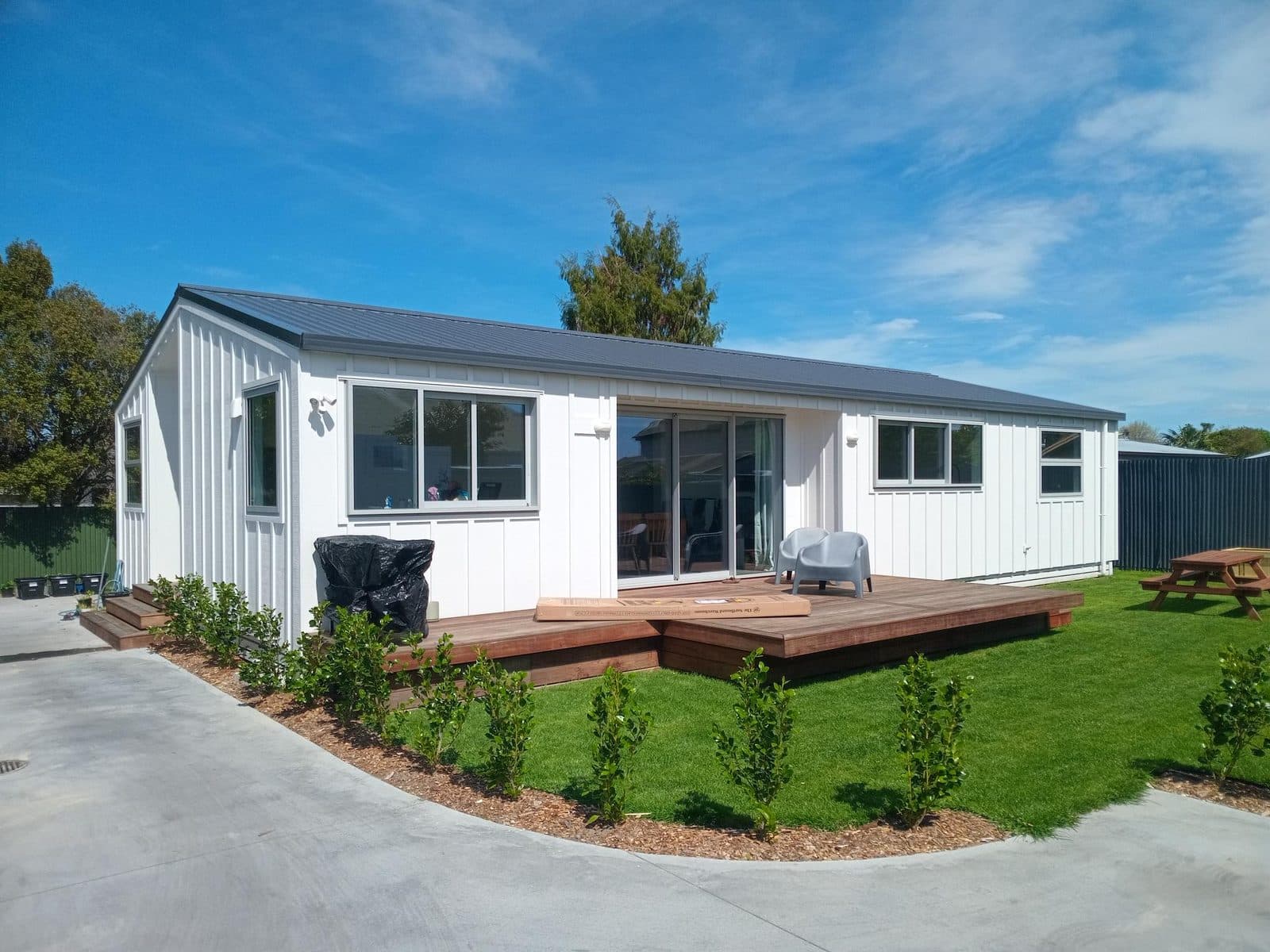
For most New Zealand weatherboard homes, a quality 100% acrylic (water-based) exterior system is the best choice - it stays flexible as the timber moves, lets moisture escape, and holds its colour for years. The primer and preparation underneath matter just as much as the top coat.
Why acrylic beats oil on weatherboard
Timber expands and contracts as the weather changes, so an exterior coating has to move with it. Old oil-based enamels dry hard and brittle, then crack and peel as the boards shift. Modern 100% acrylic paints stay flexible, resist UV fading, and breathe - which stops moisture getting trapped and blistering the paint from behind.
That flexibility and breathability is exactly what a New Zealand weatherboard home needs, especially in a damp, changeable climate like the Waikato's.
Primer and undercoat make or break it
The best top coat in the world will fail if it's put over bare or weathered timber without the right primer. Fresh and weathered timber needs sealing, and tannin-rich timbers like cedar and macrocarpa need a stain-blocking primer or they bleed brown through the paint. Knots need a knot sealer, and every repair and filled area gets spot-primed before the colour goes on.
This is why a proper weatherboard job is usually primer plus two top coats on any bare or repaired timber - not a quick single coat over the top.
Matching the paint to your timber and site
The right system depends on your cladding and your exposure. Coastal homes near Raglan cop salt-laden air that's brutal on coatings, so they warrant premium paint and more frequent maintenance. Dark colours absorb heat and make the boards move more, which can shorten paint life on a sun-blasted wall. A low-sheen finish also hides minor imperfections in older boards better than a high gloss.
Rather than defaulting to one brand for every house, we specify a premium, NZ-proven system suited to your timber, colour and site after looking at the home.
Frequently asked questions
Can I use the same paint on the weatherboards and the joinery?
Not usually. Broad weatherboard areas suit a flexible low-sheen acrylic, while doors, window frames and trim are often finished in a harder-wearing semi-gloss enamel for durability and a crisp look.
How many coats do weatherboards need?
Bare or repaired timber typically needs a primer plus two top coats. Sound, previously painted boards usually need two top coats after preparation.
Which paint brand is best for weatherboard in NZ?
We specify premium, New Zealand-proven exterior systems chosen for your timber and site rather than one brand for every job - the preparation and the right primer matter more than the label.